
Sanur Property Market Insights | MRE Bali
Sanur is becoming an increasingly interesting location for property buyers exploring real estate in Bali. Once primarily recognised for its established beachfront atmosphere and relaxed residential lifestyle, the area is now attracting attention for a broader combination of infrastructure investment, healthcare development and long-term economic potential.
For years, international property interest in Bali has been strongly associated with destinations such as Canggu, Pererenan, Uluwatu and Bingin. These areas have built their appeal around tourism, hospitality, lifestyle businesses and the growth of Bali's international community.
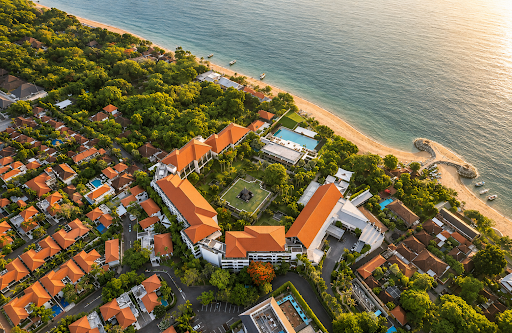
Sanur, however, offers a different proposition.
With the development of the Sanur Special Economic Zone (SEZ), the operation of Bali International Hospital and continued investment in healthcare and hospitality infrastructure, the area is developing an additional economic identity beyond conventional tourism.
For buyers considering property in Sanur, Bali, these changes raise an important question: could the area's established residential appeal, combined with its expanding infrastructure, make it an increasingly relevant location in Bali's evolving property market?

1. Why Is Sanur Attracting More Property Buyer Attention?
Sanur's appeal has traditionally been built around its established coastal environment, residential neighbourhoods and relatively relaxed pace of life.
Unlike some of Bali's newer tourism destinations, Sanur has a long-standing local and international community. Its beachfront promenade, restaurants, healthcare facilities, schools and everyday amenities contribute to an environment that supports both permanent residents and longer-stay visitors.
This distinction is becoming increasingly relevant as property buyers consider more than just a destination's popularity among holidaymakers.
Factors such as access to healthcare, established infrastructure, everyday convenience and residential suitability can all influence how buyers evaluate a location.
Sanur offers a combination of these characteristics while continuing to benefit from its coastal setting and proximity to Denpasar.
For buyers seeking a residential property in Bali, or an investment with a different demand profile from traditional holiday accommodation, Sanur presents an alternative worth exploring.
2. Bali International Hospital and the Development of Sanur's Healthcare Economy
One of the most significant developments influencing Sanur's long-term outlook is the establishment of the Sanur Special Economic Zone, a government-backed initiative designed to position the area as an integrated international healthcare and wellness destination.
At the centre of this development is Bali International Hospital (BIH), which commenced commercial operations on 14 April 2025.
The hospital provides specialised medical services across several disciplines, including cardiology, oncology, neurology, gastroenterology, obstetrics and gynaecology, and orthopaedics.
Importantly, the development is already generating measurable activity.
According to a government announcement by Indonesia's Coordinating Ministry for Economic Affairs on 10 November 2026, the Sanur SEZ recorded 36,798 patient visits through the third quarter of 2026. These included 22,046 international patients and 14,752 domestic patients.
Cumulative realised investment in the zone reached IDR 5.76 trillion, with 5,911 workers employed across 15 business tenants.
These figures highlight the scale of development taking place within Sanur's healthcare and hospitality ecosystem.
What does healthcare development mean for Sanur's property market?
Healthcare infrastructure can create accommodation requirements beyond conventional holiday tourism.
International patients may require longer stays, while accompanying family members, healthcare professionals and supporting businesses can contribute to demand for nearby residential and hospitality facilities.
This introduces a potentially broader audience for suitable properties in the surrounding area.
However, the relationship between healthcare investment and residential property performance should be considered carefully. Infrastructure development does not automatically translate into higher property prices or guaranteed rental income.
Instead, it represents an additional economic factor that buyers can consider when assessing Sanur's longer-term potential.
3. Beyond Beach Tourism: Sanur's Changing Economic Landscape
Bali remains one of Southeast Asia's most recognised international tourism destinations.
According to Statistics Indonesia (BPS), Bali welcomed 6,948,754 direct international tourist arrivals throughout 2025, representing a 9.72% increase compared with 2024. Australia remained the largest international source market, accounting for 23.44% of arrivals.
While tourism continues to support Bali's economy, the island's development is increasingly influenced by several interconnected industries.
In Sanur, healthcare, wellness, hospitality, and established residential activity are becoming important parts of the area's economic landscape.
This creates an interesting distinction between Sanur and locations whose property markets are more closely associated with short-term holiday demand.
Potential demand segments in Sanur include:
International patients and accompanying families: Visitors requiring convenient accommodation while accessing medical services.
Long-stay international residents: Individuals seeking an established coastal environment with access to everyday amenities.
Healthcare professionals and business travellers: People connected to the growing healthcare and supporting business ecosystem.
Families and lifestyle buyers: Buyers prioritising residential convenience, accessibility and a quieter environment.
Hospitality visitors: Travellers attracted to Sanur's beachfront setting, restaurants and wellness-oriented experiences.
These audiences do not necessarily have identical accommodation requirements. Nevertheless, their presence highlights the potential for a more varied property and hospitality market.
For property buyers, understanding the difference between tourism-led demand and broader residential demand is an important part of evaluating an investment opportunity.
4. Sanur vs Canggu, Pererenan and Uluwatu: Which Area Offers a Different Property Proposition?
One of the most common considerations for international buyers exploring Bali real estate is deciding which area best suits their lifestyle or investment objectives.
Sanur, Canggu, Pererenan and Uluwatu each offer distinct characteristics, and comparing them requires looking beyond their popularity.
Sanur: Established Coastal Living
Sanur is known for its established residential environment, beachfront promenade, local community and access to everyday amenities.
Its developing healthcare ecosystem adds another dimension to its appeal, making it particularly interesting for buyers considering longer-term residential use and lifestyle-oriented property ownership.
Canggu: Established Lifestyle and Hospitality Destination
Canggu has developed into one of Bali's most recognisable international lifestyle destinations.
Its dining scene, cafés, fitness studios, co-working spaces and hospitality businesses have helped establish a strong identity among international visitors and residents.
Property demand is closely connected to its lifestyle and tourism ecosystem, although buyers should also consider competition, accommodation supply and the suitability of individual properties.
Pererenan: A More Residential Alternative to Central Canggu
Pererenan has attracted attention from buyers looking for a balance between residential living, coastal access and proximity to Canggu's lifestyle amenities.
Its evolving hospitality and residential landscape offers a different character from the busier parts of Canggu, although development patterns and property suitability vary considerably across the area.
Uluwatu: Coastal Lifestyle and Hospitality Development
Uluwatu and the wider Bukit Peninsula are recognised for their dramatic coastal scenery, beach destinations and growing hospitality sector.
The area attracts lifestyle buyers and investors interested in villas, holiday accommodation and properties with distinctive coastal settings.
Each destination presents different considerations regarding infrastructure, accessibility, land characteristics and rental demand.
Sanur does not necessarily need to compete directly with these locations. Its appeal lies in offering a different combination of established residential living and expanding healthcare infrastructure.
For buyers, the most suitable location ultimately depends on intended property use, budget, ownership structure and individual investment objectives.
5. What Should Property Buyers Consider Before Investing in Sanur?
An area's growing profile does not automatically make every property within it a sound investment.
When evaluating property for sale in Sanur, buyers should consider several fundamentals before making a purchase decision.
Location and Accessibility
The specific location of a property can significantly influence its suitability for residential or hospitality use.
Buyers should consider proximity to the beach, healthcare facilities, restaurants, supermarkets, schools and major transport routes.
Accessibility should also be assessed at the individual property level, rather than assuming that every part of Sanur offers the same convenience.
Property Type and Intended Use
A residential villa, long-stay rental property and short-term holiday accommodation serve different audiences.
Understanding the intended market is essential when assessing whether a property's design, location and facilities are appropriate.
For example, a property targeting families or longer-stay residents may require a different layout and set of amenities from a villa designed primarily for short-term visitors.
Land Ownership and Legal Due Diligence
Legal considerations are particularly important when purchasing property in Indonesia.
Buyers should understand the applicable land title, ownership or leasehold structure, zoning designation, building approvals and any restrictions associated with the intended use.
Foreign buyers should also obtain independent legal advice regarding the ownership structures available to them under Indonesian law.
A property's location or commercial appeal should never replace proper legal due diligence.
Rental Licensing and Operational Compliance
For buyers considering operating a villa as tourism accommodation, business licensing and regulatory compliance deserve particular attention.
Indonesia's Ministry of Tourism has strengthened its oversight of tourism accommodation businesses, including through Minister of Tourism Circular Letter No. 4 of 2025 concerning business licensing for tourism accommodation providers.
In May 2026, the Ministry also announced further development of a verification system with online travel agencies to strengthen checks on accommodation business licensing, including valid business registration and appropriate business classifications.
This means buyers should evaluate not only whether a property is suitable for rental operations, but also whether its proposed business model can meet the relevant regulatory requirements.
Pricing and Market Comparables
Buyers should assess asking prices against comparable properties, considering land characteristics, building quality, location, facilities and ownership arrangements.
An area's increasing popularity does not automatically justify higher asking prices.
It is equally important to distinguish between advertised prices, completed transactions and actual rental performance.
Realistic Investment Expectations
Rental yields and capital appreciation should never be assumed based solely on an area's development plans or tourism growth.
Operating expenses, management fees, maintenance, occupancy levels, seasonal demand, taxes and regulatory requirements can all influence the financial performance of a property.
A well-informed purchase decision should be based on realistic assumptions and property-specific research.
6. How Is Infrastructure Investment Influencing Sanur's Long-Term Property Outlook?
Infrastructure is an important consideration when evaluating the long-term attractiveness of a real estate location.
The development of the Sanur SEZ represents a significant addition to the area's economic infrastructure, particularly through healthcare services, hospitality facilities, and supporting businesses.
The government's November 2026 update reported a cumulative realised investment of IDR 5.76 trillion in the zone through Q3 2026.
The government has also outlined longer-term development targets for the area, including cumulative investment of IDR 10.2 trillion by 2030 and approximately 43,000 jobs.
These figures represent development targets rather than guaranteed future outcomes, but they provide an indication of the scale of ambition behind the project.
For the surrounding property market, continued infrastructure investment may contribute to:
Greater economic activity and employment opportunities.
Increased demand for supporting hospitality and accommodation services.
A broader range of residential and lifestyle requirements.
Improved recognition of Sanur as a healthcare and wellness destination.
Additional interest from buyers considering locations beyond Bali's traditional tourism centres.
Nevertheless, the impact on property values will depend on how these developments translate into actual demand, infrastructure capacity and the quality of individual properties.
Bank Indonesia's Q3 2026 Residential Property Price Survey provides an important reminder that the wider Indonesian residential property market should not be viewed through overly optimistic assumptions. National primary residential property prices grew by 0.58% year-on-year, while primary residential sales contracted by 8.43%.
These are national figures rather than Sanur-specific market indicators. However, they reinforce the importance of evaluating each property according to its own fundamentals.
7. Is Sanur a Good Area to Buy Property in Bali?
Sanur can be an interesting location for buyers seeking an established coastal environment, access to everyday amenities and proximity to an expanding healthcare and hospitality ecosystem.
Its appeal may be particularly relevant to buyers prioritising residential use, longer stays or a property strategy that is not entirely dependent on short-term holiday tourism.
However, whether Sanur is the right location depends on the buyer's objectives, budget, intended property use, ownership structure and expectations regarding long-term performance.
There is no single location in Bali that is suitable for every property buyer.
The most important consideration is finding a property whose characteristics, legal framework and location align with the buyer's actual requirements.
8. Sanur Is Not the Next Canggu, and That May Be Its Advantage
It is tempting to compare every developing property destination in Bali with the island's most established tourism hotspots.
But Sanur does not necessarily need to follow the same development trajectory to remain relevant.
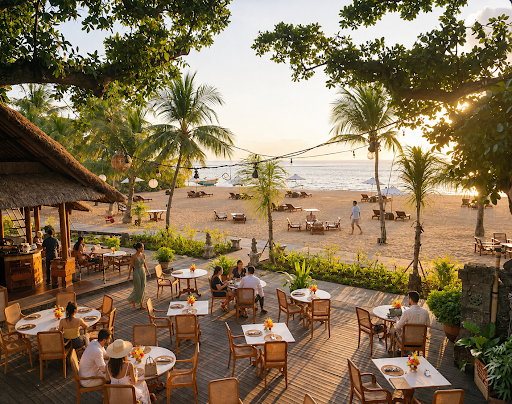
Its appeal is increasingly connected to a different combination of established residential living, coastal lifestyle, healthcare infrastructure and economic development.
While Canggu and Uluwatu continue to attract attention through their hospitality and lifestyle industries, Sanur offers a different perspective on what makes a location attractive to property buyers.
For some, the priority may be a vibrant tourism environment. For others, it may be a quieter residential setting with access to established amenities and essential services.
As Bali's property market continues to mature, these differences are worth understanding.
The question is not whether Sanur will become another Canggu. It is whether its own combination of lifestyle, infrastructure and economic development can support a sustainable and increasingly diversified property market over time.
Final Thoughts: Understanding Sanur's Place in Bali's Evolving Property Market
Sanur is entering an interesting chapter in its development.
The operation of Bali International Hospital, continued investment in the Sanur Special Economic Zone and the area's established residential character are creating a broader narrative around its future.
For property buyers exploring real estate in Bali, these developments provide additional reasons to look beyond the island's most familiar investment destinations.
However, a promising location is only one part of a successful property decision. Legal security, realistic pricing, development quality, location and genuine market demand remain essential considerations.
At MRE Bali, we believe that understanding the wider property landscape is just as important as finding the right property.
Whether you are exploring a residential villa, considering a lifestyle purchase or researching property investment opportunities in Bali, our team can help you navigate the market with a more informed perspective.
Explore Bali through a more informed lens with MRE Bali.